GET IN TOUCH TODAY!
"*" indicates required fields

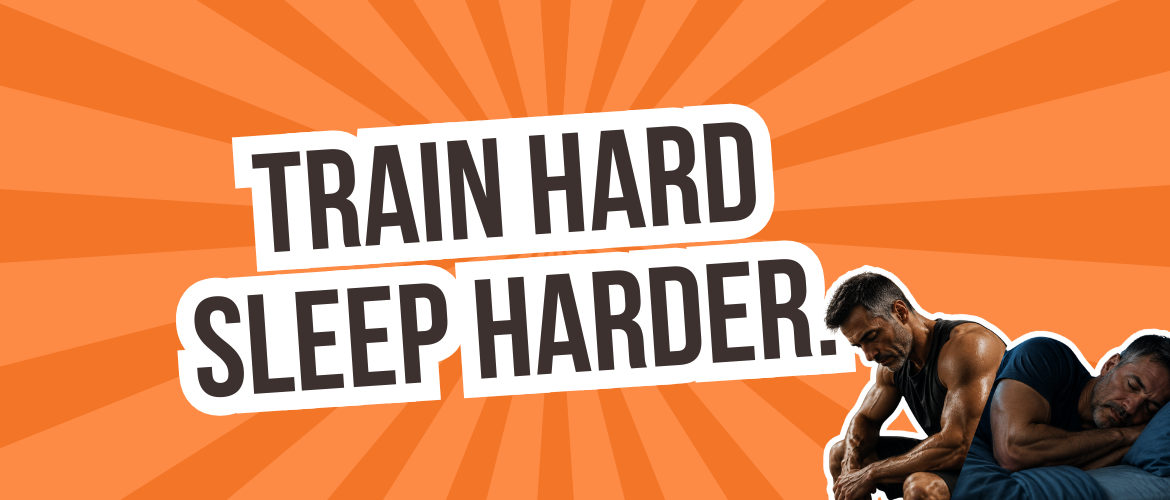
Most people who are serious about their fitness spend a lot of time thinking about their training programme.
How many sets should I do?
What rep range is best?
Should I train four days or five?
Should I add another interval session?
Do I need to change my exercises?
These things matter.
But there is another part of your programme that might have an even bigger impact on the results you get from all that hard work.
Sleep.
You can have a beautifully periodised training programme, eat plenty of protein and buy every recovery gadget known to humanity, but if you consistently sleep badly, you are making the whole process harder than it needs to be.
Training provides the stimulus.
Recovery is where your body actually responds to it.
And sleep is a major part of that recovery process.
Exercise temporarily stresses the body.
That is the point.
Resistance training challenges your muscles. Running challenges your cardiovascular system. Sprinting, jumping and heavy lifting place demands on your nervous system.
Your body then adapts to those demands during the period between training sessions.
This is why recovery is actually recognised as one of the fundamental principles of effective training. Even our Level 4 Strength and Conditioning qualification specifically includes recovery strategies, including sleep and circadian rhythms, as part of effective programme design.
The problem is that fitness enthusiasts often concentrate almost entirely on creating a better training stimulus.
More sets.
More exercises.
More sessions.
More intensity.
But there comes a point where improving your recovery may give you more benefit than adding even more training.
If your goal is to become stronger or build muscle, your body needs more than a decent workout.
Resistance training stimulates changes within skeletal muscle, but those adaptations require recovery.
One particularly interesting laboratory study looked at healthy young adults following a night of normal sleep and a night of total sleep deprivation.
After the sleepless night, researchers measured an 18% reduction in muscle protein synthesis compared with the normal sleep condition.
That does not mean one terrible night’s sleep destroys your gains.
Life happens. Babies happen. Work happens. Neighbours inexplicably decide to have parties on Tuesdays.
But it does demonstrate something important.
The biological environment in which you recover matters.
If you are training hard but repeatedly cutting your sleep short, you may be undermining some of the very adaptations you are training to create.
You will often see exaggerated claims online about sleep “destroying your testosterone” or sending cortisol through the roof.
As usual, reality deserves a little more nuance.
However, sleep certainly interacts with the hormonal environment involved in recovery.
In that same controlled sleep-deprivation study, a night without sleep increased circulating cortisol by 21% and reduced testosterone by 24% the following day. Again, this was an extreme experimental condition involving total sleep deprivation, so it should not be interpreted as what happens every time you get six hours rather than eight.
The important lesson is simpler.
Sleep is not passive.
While you are asleep, your body is still doing an enormous amount of work related to physical recovery, metabolism and healthy brain function. The US National Heart, Lung, and Blood Institute describes sleep as playing a vital role in physical health and healthy brain function.
So if you care about training adaptation, sleep should be considered part of the programme rather than something that happens after it.
This might be one of the most overlooked effects of poor sleep.
Imagine somebody trying to lose body fat.
They have calculated their calories.
They are exercising regularly.
They have filled the fridge with sensible food.
Then they consistently sleep five or six hours.
Now they are tired, hungry and standing in the kitchen at 9.30 pm having an increasingly intense negotiation with a packet of biscuits.
Sound familiar?
Controlled sleep studies have found that sleep restriction can influence hunger and appetite. Research has reported changes in appetite-regulating hormones such as ghrelin and leptin, although the exact hormonal response is not identical across every study.
Another controlled study found that increased ghrelin following sleep restriction predicted greater food intake when participants were subsequently allowed to eat freely.
This matters because fat loss is not simply about knowing what to eat.
Most people already know that eating lean protein, vegetables and sensible portions is probably a better idea than attacking a family-sized bag of crisps every evening.
The difficult part is consistently making those decisions.
If poor sleep makes you hungrier, more tired and less able to regulate your behaviour, sticking to your nutrition plan becomes unnecessarily difficult.
So if someone is struggling with their diet, I would not automatically respond by making their nutrition plan more complicated.
I would ask:
How are you sleeping?
Sleep does not simply affect what happens after your workout.
It can affect the quality of the workout itself.
Research involving collegiate basketball players found that extending sleep was associated with improvements in sprint performance, shooting accuracy, reaction time, mood and daytime sleepiness.
Research into resistance training has also found that sustained sleep restriction can reduce the quality and quantity of resistance exercise performed.
Again, you might still be able to train after a poor night’s sleep.
You might even have a decent session.
But zoom out over weeks and months.
If better sleep allows you to train with slightly more energy, complete slightly more quality work, concentrate better on technique and recover more effectively afterwards, those small advantages can accumulate.
That is why sleep can potentially improve your programme without you changing a single exercise.
Good training requires decision-making.
You regulate effort.
You judge technique.
You react to your environment.
You learn new skills.
You decide whether to push harder or back off.
Sleep deficiency can impair attention, reaction time and daytime functioning.
That matters for everyone exercising, but it becomes particularly relevant for coaches.
Personal Trainers are constantly observing movement, making decisions, communicating and adapting sessions.
Being a good coach requires more than knowing some exercises.
You need to be switched on.
There is no magic number that applies perfectly to everyone.
Sleep requirements vary between individuals.
However, the general recommendation for adults is around 7 to 9 hours per night.
Rather than obsessing about achieving exactly eight hours every night, look at the bigger picture.
Ask yourself:
That final question is particularly important.
If somebody is already training regularly but sleeping five hours because they wake at 5 am to get another workout in, I would seriously question whether that extra session is helping.
Sometimes the best addition to your training programme is removing something and going to bed.
You do not need a £400 sleep tracker, eight supplements and a Himalayan yak-wool sleep mask.
Start with the basics.
You cannot get eight hours of sleep if you only spend six hours in bed.
Start by working backwards from the time you need to wake up and protect an appropriate bedtime.
Going to bed and waking at broadly similar times helps support a regular sleep-wake rhythm.
Give yourself some separation between the chaos of the day and trying to fall asleep.
Reading, relaxing, taking a bath or simply dimming the lights can help create that transition.
Caffeine is useful, but it is still a stimulant.
Its effects can last for hours, so repeatedly drinking coffee late in the afternoon or evening may interfere with your sleep.
Alcohol may initially make you feel sleepy, but it can disrupt sleep later in the night.
A bedroom that is quiet, dark and comfortably cool is generally recommended for better sleep.
You would not accidentally forget to train for three weeks and expect brilliant results.
Apply some of that same intent to sleep.
You do not need perfection.
You need consistency.
The fitness industry loves complexity.
New programmes are exciting.
New exercises are exciting.
New supplements are exciting.
“Go to bed at a sensible time” is unlikely to generate millions of views on Instagram.
But that does not make it less important.
For most recreational exercisers, there are probably much bigger gains available from consistently doing the basics well than endlessly searching for a more sophisticated training programme.
Train regularly.
Progress gradually.
Eat well.
Walk.
Recover.
Sleep.
Then repeat it for years.
That is not particularly sexy.
But it works.
If you are a Personal Trainer, your job is not simply to prescribe sets and repetitions.
You should be helping clients understand the factors that influence their ability to train, recover and make progress.
That includes sleep.
A brilliant programme that somebody cannot recover from is not a brilliant programme.
The best coaches learn to look beyond the hour their client spends in the gym and consider the other 23 hours of their day.
If you are already a qualified Personal Trainer and want to develop a deeper understanding of programming, performance and recovery, our Level 4 Certificate in Strength and Conditioning explores the scientific principles behind effective training, including recovery strategies such as sleep.
And if you are considering becoming a Personal Trainer and want to develop the skills and knowledge that help you stand out in a crowded industry, take a look at the Storm Fitness Academy Elite Package.
Because great coaching is not about finding the fanciest programme.
It is about understanding the person in front of you, applying the fundamentals and knowing what actually makes a difference.
And sometimes, the most powerful training advice you can give someone is:
Go home and get some sleep.
Thinking about becoming a Personal Trainer, but not quite sure where to start? Fill in the contact form below and tell us a little about where you are now and what you’d like to achieve. There’s no pressure and no hard sell, just a friendly conversation to help you understand your options and work out the best next step for you. If a career in fitness has been on your mind for a while, this could be a good place to start.
"*" indicates required fields