GET IN TOUCH TODAY!
"*" indicates required fields

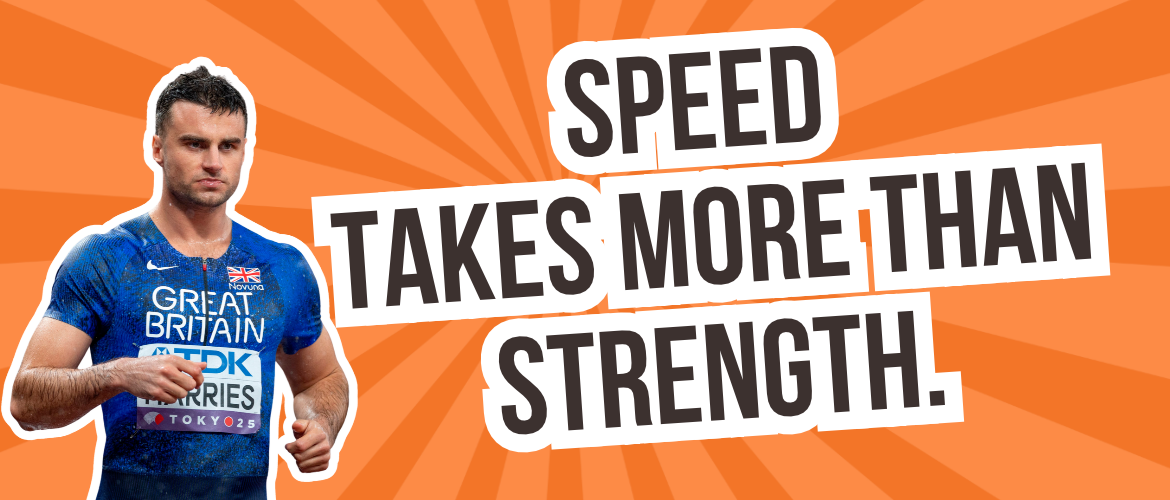
After our sprint workshop at Withdean Stadium, I sat down with Toby Harries for a quick chat before we headed off for a well-earned pint.
There had been plenty of smiles, plenty of energy and, in my case, plenty of heavy breathing. But the session also gave us a lot to think about as coaches.
Toby is an Olympic bronze medallist, having been part of Great Britain’s men’s 4 × 400 metres relay squad at Paris 2024. You can explore his athletics background on his World Athletics profile.
Our conversation covered natural talent, consistency, sprint technique and why being strong in the gym doesn’t automatically mean you’re ready to run flat out.
Here are the lessons that stood out for me.
Toby first realised he was quick in the playground, where other children struggled to catch him. He played rugby, swam, played tennis and generally enjoyed being good at sport.
There was an athletic background in his family too. Both his parents had competed at county level in sport.
But Toby was clear that talent alone doesn’t take you all the way. His explanation brought together three ingredients: natural ability, the right training environment and the mindset to keep going over the years.
For anyone becoming a personal trainer, that’s a useful reminder. Your clients arrive with different abilities and experiences. Your job is to help them develop from their own starting point, with a process they can stick to.
Toby described taking his nutrition, sleep and training seriously from around the age of 15. Balanced meals, enough protein, carbohydrate, fruit and vegetables were habits he developed early.
He also talked about an approximately 80/20 approach to eating, allowing room for enjoyment alongside a consistent foundation.
However, his commitment occasionally went too far. He admitted that he would turn up to training even when he was ill, something he is still learning to manage.
That part of the conversation matters. We often praise people for never missing a session, but good judgement is part of being consistent too.
Toby’s training includes harder weeks, easier weeks and planned periods of rest. Recovery belongs in the programme, rather than being something you only think about when everything starts falling apart.
When I asked what personal trainers should consider before taking clients sprinting, Toby’s immediate answer was hamstrings.
He emphasised the demands of fast running, particularly for people who aren’t accustomed to it. His concerns included running mechanics, preparation and repeating hard efforts as fatigue builds.
I had a slightly embarrassing example of my own.
Once, my sport and exercise science students asked whether they could leave early. I told them they could if they beat me in a sprint.
No warm-up. No sensible build-up. Just a teacher who should have known better.
Three strides later, I felt the ping. I spent the next two weeks limping.
Toby’s point was that strength in the gym doesn’t automatically prepare someone for the coordination and demands of sprinting. It’s a different task, and it deserves proper preparation.
Our workshop included an extensive warm-up, with mobility work, running drills and a gradual build-up towards faster efforts.
It wasn’t just something to get out of the way before the interesting bit. It was a substantial part of the learning.
I recognised the RAMP structure we cover with our strength and conditioning learners:
Toby acknowledged that the workshop’s roughly hour-long preparation wouldn’t fit every client session. The lesson was the sequence and attention to detail, rather than copying that duration into every programme.
For a new participant, drills can make preparation engaging while giving the coach an opportunity to observe how they move.
When I asked Toby for one simple coaching tip, he focused on bringing the hips forwards, using the glutes and staying relaxed through the upper body.
He described how some runners appear to sit into their running, and suggested this cue as something to explore when coaching faster movement.
We also discussed the cone drills from the workshop. These gave us a clear target for where to place our steps and an opportunity to practise rhythm and stride length.
The detail I particularly liked was Toby’s warning against turning the drill into exaggerated bounding. The aim was to run fluidly, with spacing adjusted progressively.
As a coach, a cue gives you something to try and observe. Watch how the individual responds before deciding whether it is helping.
Toby also spoke about his physique and how little designated upper-body work he does in some phases of his training.
He described two upper-body exercises a week, alongside core work, seasonal circuits and his wider sprint programme.
That was interesting, but it’s his personal experience. The interview doesn’t establish that sprinting alone will build someone else’s upper body, or that it should replace their resistance training.
The more useful coaching takeaway is to consider how the different parts of a programme fit together, rather than copying one feature of an elite athlete’s routine.
The workshop reminded me how much there is to learn when you step outside your usual training environment.
It’s easy to take a group outside, ask them to run hard and judge the session by how exhausted everyone looks. Toby gave us much more to think about: preparation, movement quality, useful cues and managing fatigue.
For personal trainers, the question is whether your client is prepared for what you are asking them to do, and whether you can coach it well.
If you are a personal trainer and want to develop those skills further, explore our Level 4 Strength and Conditioning course.
And listen to the full interview with Toby for more on his approach to training, consistency and sprint coaching.
Want more information about any of our courses? Get in touch via the form below.
"*" indicates required fields