GET IN TOUCH TODAY!
"*" indicates required fields

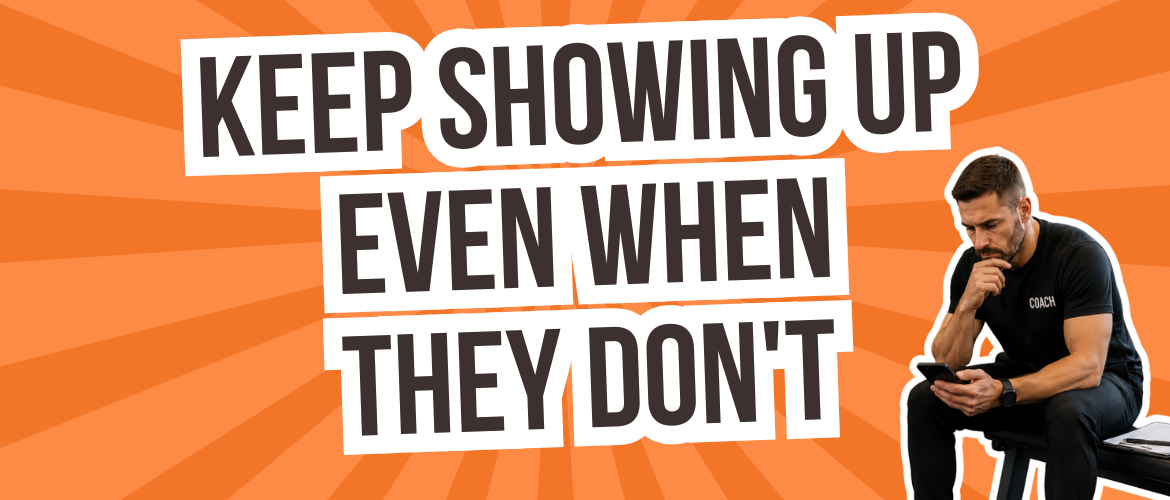
Every Personal Trainer experiences it eventually.
You write the programme. You check in regularly. You answer messages, provide encouragement, and genuinely want your client to succeed.
Yet they cancel sessions.
They stop tracking their nutrition.
They miss workouts.
Their progress stalls.
Eventually, you find yourself asking:
“Why do I seem to care more about this than they do?”
Few situations challenge a coach’s motivation more than working with an unmotivated client. It can feel frustrating, disappointing, and sometimes even personal. Many good coaches begin questioning their abilities, their programme design, or whether they’re doing enough.
The truth is that every experienced coach has faced this situation. Learning how to manage it is part of becoming a better coach.
One of the biggest misconceptions in fitness is that motivated people stay motivated.
They don’t.
Motivation fluctuates for everyone, including coaches.
Clients experience stressful jobs, financial pressures, family responsibilities, poor sleep, illness, and low mood. Some people begin a programme highly motivated, only to find that life quickly gets in the way.
Many clients hire a Personal Trainer precisely because they struggle to stay motivated alone. If they were perfectly consistent, disciplined, and knowledgeable, they probably would not need a coach in the first place.
Understanding this can help coaches stop viewing every lapse in adherence as a personal failure.
Caring deeply about clients is one of the qualities that makes great coaches.
However, caring can become a problem when coaches begin accepting responsibility for choices that belong to the client.
You can provide knowledge, accountability, support, and encouragement. You can adjust programmes, answer questions, and remove barriers where possible.
But you cannot exercise for them.
You cannot prepare their meals, improve their sleep, or make decisions on their behalf.
One of the most important lessons in coaching is recognising where your responsibility ends. Your role is to guide, educate, and support. The client remains responsible for their actions.
When coaches try to carry both roles, frustration and burnout usually follow.
When a client loses motivation, coaches often assume they have done something wrong.
Perhaps the sessions are boring. Perhaps the programme isn’t working. Perhaps the client doesn’t value the support.
In reality, the reasons are often far more complicated.
Clients may be dealing with stress at work, relationship difficulties, financial worries, low confidence, poor sleep, mental health challenges, or simply feeling overwhelmed by life.
Some clients disengage because they feel embarrassed that they have fallen behind. Others avoid contact because they fear disappointing their coach.
Their behaviour is often more about their own circumstances than your ability as a professional.
One of the most useful questions a coach can ask is:
“What can I control today?”
You can control your preparation, your communication, your professionalism, your energy, and your willingness to continue learning.
You cannot fully control client attendance, adherence, or results.
The coaches who survive long term are those who separate their own performance from their clients’ behaviours. They take pride in delivering an excellent service, regardless of whether every client follows the plan perfectly.
This mindset helps prevent emotional exhaustion and keeps coaching enjoyable.
Most people enter the fitness industry because they genuinely want to help others.
Unfortunately, some coaches gradually begin measuring their worth solely through client results.
The reality is that not every client will succeed immediately.
Some need more time.
Some may leave and return years later.
Some will struggle repeatedly before eventually making progress.
Your purpose remains the same.
You show up. You educate. You encourage. You support.
Sometimes the impact you make isn’t immediately visible. Advice that seems ignored today may be remembered years later.
Many experienced coaches have former clients return and say, “I wasn’t ready back then, but what you taught me finally clicked.”
Progress is not always obvious.
A client who hasn’t lost weight may still be sleeping better, feeling more confident, or becoming more active.
Someone attending one session per week after years of inactivity may be making enormous progress.
Behaviour change often happens slowly.
The small victories that seem insignificant to coaches can represent major achievements for clients.
Celebrating these wins can help both the client and the coach stay engaged.
Coaching is emotionally demanding work.
If your mood rises and falls with every client’s success or failure, burnout becomes almost inevitable.
Good coaches continue training themselves. They pursue their own goals, maintain hobbies, spend time with family, and continue developing professionally.
You are more than a coach.
You may also be a parent, partner, athlete, runner, lifter, friend, or business owner.
Maintaining your own physical and mental health allows you to show up consistently for your clients without becoming emotionally exhausted.
As coaches, we often encourage our clients to look after themselves first. The same advice applies to us.
The most experienced coaches understand that motivation is temporary, but consistency is powerful.
Not every client will achieve their goals.
Not every client will remain motivated.
Not every client will become a success story.
But every client deserves a coach who remains professional, supportive, and consistent.
The client who frustrates you today may eventually become your biggest advocate. The person who misses sessions for six months may return ready to change their life.
Your role is not to create motivation.
Your role is to provide support, guidance, and an environment where motivation has the opportunity to grow.
Sometimes the consistency you demonstrate as a coach becomes the example your clients need most.
If you’re passionate about helping people improve their health and fitness, understanding behaviour change is just as important as understanding exercise programming.
The best coaches are not simply experts in sets and repetitions. They understand people, motivation, confidence, and the challenges that prevent change.
If you’d like to develop your coaching skills or begin your journey into the fitness industry, explore the courses available at Storm Fitness Academy or complete the contact form below.
"*" indicates required fields