GET IN TOUCH TODAY!
"*" indicates required fields

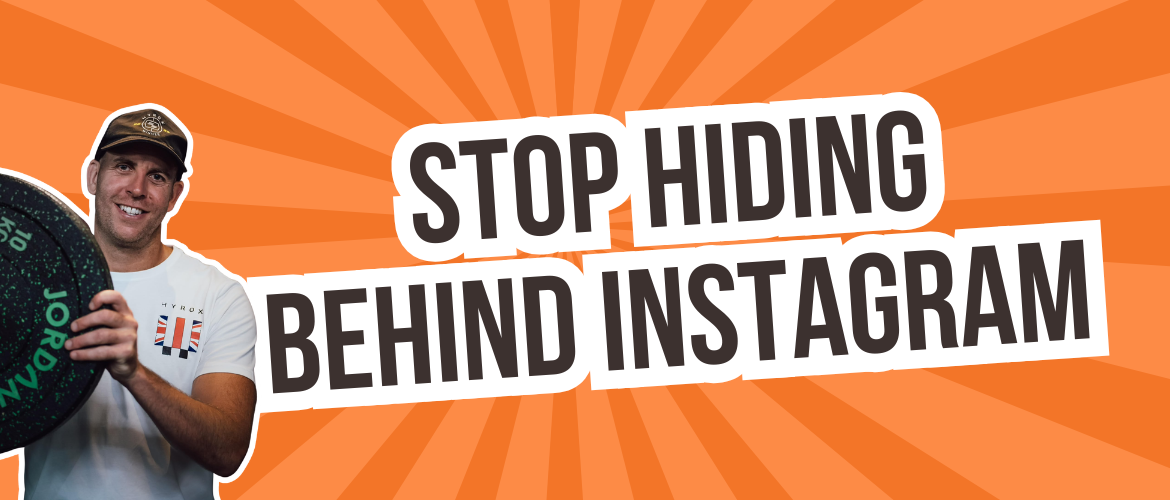
What actually makes someone a successful Personal Trainer?
Is it having the best physique?
Knowing more exercise science than everyone else?
Having thousands of Instagram followers?
According to gym owner and Personal Trainer Matt Lambert, the answer is much simpler.
Be good with people.
Take initiative.
Keep learning.
Talk to members.
Care about what you do.
And be prepared to work.
I recently sat down with Matt for the Storm Fitness Academy podcast to talk about a fitness career that now spans around 25 years.
Matt started at the bottom, doing work experience in a local health club, cleaning equipment and learning from the trainers around him.
He qualified as a Gym Instructor and Personal Trainer, built his own client base, moved into management, started a successful running club and eventually became a gym owner himself.
Today, he still coaches alongside running a health club with thousands of members.
That means Matt has experienced the fitness industry from almost every angle.
He has applied for jobs.
He has built a PT business.
He has managed trainers.
And now he hires them.
Here are some of the biggest lessons from our conversation.
I asked Matt a question I like asking gym managers:
When someone applies for a Personal Trainer job, what are you actually looking for?
His answer was immediate.
Personality.
Obviously, you need to be properly qualified.
But once those qualifications are in place, Matt is looking for something else.
Can you talk to people?
Are you approachable?
Are you confident without being cocky?
Can you work as part of a team?
Will members warm to you?
Are you willing to learn?
In Matt’s words, he wants someone who has “a bit about them.”
It’s difficult to define perfectly, but most of us know what that means.
You don’t have to be the loudest person in the room.
You don’t need to become some exaggerated Instagram version of a Personal Trainer.
You do need to be someone people feel comfortable around.
Because personal training is ultimately a people business.
One of the simplest pieces of advice in the entire conversation might also be one of the most valuable.
Learn people’s names.
Imagine walking into your gym and hearing:
“Morning Sarah. How was your holiday?”
Or:
“Hi Dave. How did that 10K go at the weekend?”
It’s a tiny interaction.
But it tells that member:
I noticed you. I remember you. You belong here.
Matt explained that when somebody eventually decides they might want some personal training, who are they likely to approach?
Probably not the trainer who has ignored them for six months.
They’ll approach the trainer who smiles, says hello and remembers what is happening in their life.
Those tiny conversations accumulate.
And eventually they create trust.
This is something I tell our students at Storm all the time:
Have more conversations.
New Personal Trainers can spend enormous amounts of time thinking about Instagram.
What should I post?
Should I make a Reel?
What hashtags should I use?
Do I need a logo?
Meanwhile, there are 100 people walking around the gym who they haven’t spoken to.
Matt’s advice was straightforward.
Get out there.
Talk to people.
Smile.
Be helpful.
Ask questions.
Take an interest.
You don’t need to walk up to somebody and immediately try to sell them twelve PT sessions.
Just become somebody they know.
Social media can absolutely support a PT business.
But don’t hide behind it.
The ability to comfortably speak to real people is one of the most valuable skills you can develop as a Personal Trainer.
Matt’s own career began through work experience.
He initially worked voluntarily for several hours each week.
That eventually became a paid shift.
One shift became more hours.
More hours created more opportunities.
And eventually he qualified and progressed within the industry.
We talked about what Matt would think today if a newly qualified Personal Trainer walked into his gym and asked to speak to the owner rather than simply emailing a CV.
His reaction?
They’re proactive.
That person has already demonstrated something useful.
They’ve shown initiative.
They’ve stepped outside their comfort zone.
They’ve created an opportunity for a conversation.
Matt even made the point that sometimes a gym might not technically be recruiting, but if the right person walks through the door, a position can sometimes be created.
That’s a very different approach from sending 30 identical CVs and waiting for somebody to respond.
If there’s a gym you’d genuinely like to work in:
Go there.
Train there.
Meet people.
Introduce yourself.
Ask questions.
Make yourself known.
Matt didn’t start as a gym owner.
He didn’t even start as a Personal Trainer.
He started cleaning.
He shadowed other trainers.
He helped with gym inductions.
He ran fitness tests.
He watched.
He listened.
He learnt.
And that experience compounded over time.
There’s an important lesson here for newly qualified PTs.
Sometimes your first opportunity isn’t about earning the maximum possible salary.
It’s about getting close to the people, environment and experiences that can accelerate your development.
Work experience can help.
Shadowing a good coach can help.
Attending workshops can help.
Trying other trainers’ classes can help.
Matt actually said that if he were starting again, he would probably hire a few different Personal Trainers himself simply to experience how other coaches worked.
What did they do well?
How did they greet him?
How did they explain things?
What did he enjoy?
What would he do differently?
That’s professional development you can’t always get from a textbook.
Fitness knowledge matters.
But there is a theme that runs through Matt’s entire career.
He likes people.
He enjoys coaching.
He enjoys conversations.
He likes seeing people improve.
Even after around 25 years, he still personally trains and delivers group sessions.
He told me he doesn’t wake up thinking:
“I’ve got to go to work.”
That’s quite a statement after a quarter of a century in one industry.
Part of the reason is that fitness was never simply a job to him.
He genuinely enjoys it.
That matters because clients can normally tell when you’re interested in them and when you’re simply going through the motions.
A successful Personal Trainer doesn’t just enjoy exercise.
They need to enjoy helping other people exercise.
There is a difference.
Matt has always been involved in sport himself.
Running.
Swimming.
Gym training.
Competitions.
More recently, HYROX.
That has helped his career because when he talks to clients about exercise, it comes from genuine experience.
He isn’t simply telling somebody else to train.
He’s a participant too.
That doesn’t mean every Personal Trainer needs to look like a fitness model.
They don’t.
But having a genuine enthusiasm for physical activity makes a huge difference.
You understand what training feels like.
You understand motivation.
You understand frustration.
You understand injuries and setbacks.
You understand the satisfaction that comes from working towards something.
And that shared experience gives you plenty to talk about with clients.
One of the most interesting parts of Matt’s career has been his involvement in HYROX.
His gym spotted the growth of functional fitness relatively early and converted space into an area suitable for HYROX-style training.
Matt then did the event himself.
The initial handful of members taking part eventually grew into a much larger community of people training and competing together.
Why has it worked so well?
Because people aren’t simply exercising.
They’re training for something.
They have a goal.
They have an event in the calendar.
They have training partners.
They have a community.
They have times they want to beat.
Matt also explained that this has been excellent from a gym perspective because it creates engagement and retention.
People have a reason to keep coming back.
This is another important lesson for fitness professionals.
The industry keeps changing.
HIIT has had enormous periods of popularity.
Functional fitness grew.
HYROX exploded.
New training methods, events and communities will continue to emerge.
Good coaches don’t blindly jump onto every trend.
But they do keep their eyes open.
As Matt put it, you want to try to get ahead of the wave.
If you’re currently completing your PT qualification and hope to work in a gym, Matt’s advice can be simplified considerably.
A gym owner wants someone who is:
Qualified.
But also someone who is:
Approachable.
Friendly.
Reliable.
Proactive.
Willing to learn.
Comfortable speaking to members.
Enthusiastic about fitness.
Able to work within a team.
Prepared to make an effort.
Your Level 3 Personal Training qualification gets you through the first door.
Your behaviour determines what happens afterwards.
This might be one of the most reassuring messages for new Personal Trainers.
Matt openly admits social media isn’t his strongest area.
Yet he has built a career lasting around 25 years.
He has trained countless clients.
Built a running club.
Managed teams.
Built group training programmes.
Developed HYROX training.
And become a gym owner.
There is an important distinction here.
Being good at creating fitness content and being good at being a Personal Trainer are not the same skill.
Social media can absolutely help you grow a modern fitness business.
But don’t make the mistake of thinking a large following is a prerequisite for success.
You can build a brilliant career by becoming extremely good at:
Coaching.
Communicating.
Building relationships.
Getting results.
Being reliable.
And becoming somebody people recommend.
After talking to Matt, I’d reduce it to this:
Get qualified. Get experience. Talk to people. Be useful. Keep learning.
It isn’t particularly glamorous.
But perhaps that’s the point.
Most successful fitness careers aren’t created by one viral Instagram Reel.
They’re created through thousands of small interactions.
Remembering somebody’s name.
Helping someone with an exercise.
Taking an extra course.
Showing up early.
Asking an experienced coach a question.
Trying a new class.
Introducing yourself to a gym manager.
Supporting a nervous client.
Doing a little more than was expected.
And then doing it again tomorrow.
Matt started with a few hours of voluntary work in a gym.
Around 25 years later, he owns one.
That’s what playing the long game can look like.
In the full Storm Fitness Academy podcast episode, Matt and I discuss:
If you’re passionate about fitness and like the idea of helping other people become healthier, stronger and more confident, personal training could be an incredibly rewarding career.
At Storm Fitness Academy, we help people turn their interest in fitness into a professional career.
Our Personal Trainer packages combine industry-recognised qualifications with practical support designed to help you actually succeed once you’re qualified.
That includes:
Explore our Personal Trainer courses:
https://www.stormfitnessacademy.co.uk/courses/
Or, if you’re still deciding whether personal training is right for you, don’t overthink it.
Fill in the contact form at stormfitnessacademy.co.uk and have a conversation with us.
Tell us where you are now and where you’d like to get to.
We’ll help you work out the next sensible step.
Matt’s advice is just as relevant if you’ve already got your certificate.
Don’t sit at home waiting for your first client.
Get into gyms.
Attend workshops.
Talk to people.
Learn names.
Try classes.
Meet coaches.
Ask questions.
Put yourself in environments where opportunities can happen.
Your qualification allows you to call yourself a Personal Trainer.
What you do next is what builds the career.
"*" indicates required fields