GET IN TOUCH TODAY!
"*" indicates required fields

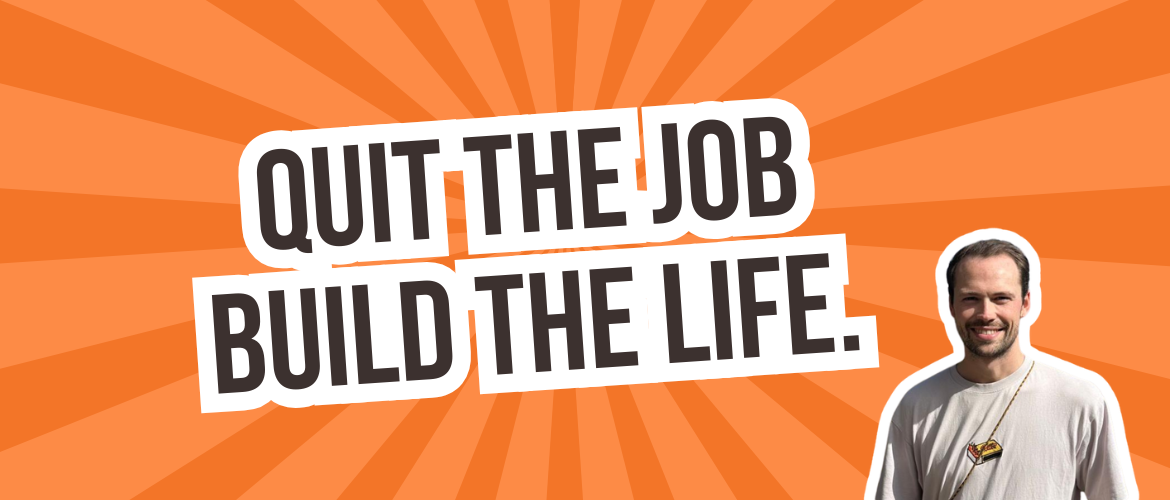
Have you ever found yourself in a perfectly respectable job, earning decent money, with a clear career path, but still wondering:
Is this really what I want to do for the rest of my life?
That was the position Hugo Hunt found himself in.
Hugo had studied at university before moving into the pharmaceutical industry, working within advertising and helping pharmaceutical companies communicate their products.
On paper, it made sense.
He was interested in human biology, healthcare, science and creative work.
There was just one problem.
He wasn’t happy.
Eventually, Hugo made a career change into personal training.
When I caught up with him on the Storm Fitness Academy podcast, we talked about why he made the change, how he tested different career options before committing, what he has learnt since becoming a fitness professional and why sometimes the biggest risk is simply becoming too comfortable.
If you are considering a career change to personal training, there are some really useful lessons in his story.
One of the interesting things about Hugo’s story is that he wasn’t escaping a terrible industry.
He spoke positively about the pharmaceutical industry and the contribution it makes to healthcare.
The problem was more personal.
He wanted to feel closer to the impact of his work.
Working in advertising meant he might contribute towards something that ultimately helped patients, but he rarely got to see the outcome himself.
Personal training offered something different.
You work directly with people.
You can see someone’s confidence increase.
You can watch their movement improve.
You can see them become stronger.
You hear when they tell you they are sleeping better, feeling fitter, enjoying exercise or doing something they previously thought they couldn’t do.
For Hugo, that direct relationship with the person he was helping became incredibly attractive.
There was another motivation behind Hugo’s career change.
He had become increasingly interested in the role lifestyle plays in long-term health.
Exercise, strength training, cardiovascular fitness, nutrition, sleep and other healthy behaviours became subjects he wanted to understand more deeply.
Rather than simply being interested in health himself, he wanted to help other people improve theirs.
Personal training provided a vehicle for doing that.
But the job itself also fitted the kind of lifestyle he wanted.
He wanted:
This is an important point if you are considering becoming a personal trainer.
Don’t only ask:
“Would I enjoy training people?”
Ask:
“Would the lifestyle of being a personal trainer suit the life I want to build?”
Those are two slightly different questions.
One of my favourite observations from the conversation was Hugo’s description of being comfortable in a job.
He said:
“The most dangerous position you can be in in a job is when you’re coasting.”
I think there is a lot of truth in that.
If your job is absolutely unbearable, you will probably do something about it.
The more difficult situation can be when everything is just about good enough.
The salary is decent.
The job is secure.
You’re competent at it.
People expect you to continue.
Changing career suddenly feels risky.
So another year passes.
And then another.
Hugo admitted that becoming deeply unhappy in one particular role eventually gave him the push he needed.
Sometimes dissatisfaction is useful information.
It doesn’t automatically mean you should resign tomorrow morning, but it might be telling you that something needs to change.
This was probably the most useful idea from the entire podcast.
Before becoming a personal trainer, Hugo considered several different careers.
At one stage, he thought about making documentaries.
So instead of spending six months researching what life as a documentary maker might theoretically be like, he entered a documentary competition and actually made one.
He discovered it wasn’t for him.
Excellent.
That wasn’t a failure.
He had collected information.
He also considered psychology and mental-health-related work.
Again, he found ways to experience elements of that world before committing completely.
At the same time, he began studying areas of exercise and mobility that interested him.
Gradually, the evidence started pointing towards personal training.
Fitness coaching combined many of the things he wanted:
Helping people.
Health.
Exercise.
Human interaction.
Problem solving.
Business.
Independence.
Being physically active.
As Hugo put it, think about:
What’s the quickest way I can test whether this is right for me?
That’s brilliant career advice.
People often contact us at Storm believing they need a ten-year career plan before enrolling on a personal training course.
You really don’t.
You need a sensible next step.
Hugo didn’t know exactly what his eventual fitness business would look like when he started.
He qualified.
Then he started gaining experience.
He got a job working in a gym.
He started coaching people.
He attended workshops.
He continued learning.
And his ideas became clearer because he was actually doing the job.
This is something I see repeatedly with our students.
Confidence rarely arrives before action.
It usually develops because of action.
You learn something.
You try it.
You gain experience.
You make mistakes.
You improve.
Then the next decision becomes easier.
Another part of Hugo’s experience that really stood out was how much he enjoyed being around people who shared his interests.
Anyone who loves training probably recognises this.
You can only tell your uninterested work colleagues about your latest 10K, squat session or thoughts on strength training for so long before you realise their eyes have glazed over.
In the fitness industry, those conversations are normal.
Hugo described how being surrounded by trainers and coaches reinforced his feeling that he was moving in the right direction.
He could talk about health, training and coaching with people who were equally interested.
That sense of belonging matters.
Changing career isn’t only about changing what you do between nine and five.
Sometimes you are changing the environment, conversations and people surrounding you too.
Our conversation also moved into Hugo’s developing coaching philosophy.
His interest is increasingly centred around helping people remain strong, mobile, fit and physically capable throughout their lives.
We spoke about strength training, cardiovascular fitness, running, mobility and maintaining the ability to perform everyday activities as we age.
That reflects something important about modern personal training.
The stereotypical image of the PT shouting at someone while they do burpees is increasingly outdated.
A good personal trainer might help someone:
Become stronger.
Improve their fitness.
Move with more confidence.
Prepare for a sporting challenge.
Lose body fat.
Build muscle.
Return to exercise.
Develop healthier routines.
Remain physically capable as they get older.
Or simply enjoy exercise again.
Personal training is ultimately about helping someone use exercise to improve their life.
That creates a huge range of potential career paths for someone entering the industry.
Hugo has developed a particular interest in mobility, strength, running and long-term physical capability.
Another trainer might become passionate about menopause and women’s health.
Someone else might love bodybuilding.
Powerlifting.
Older adults.
Exercise referral.
Hyrox.
Sports performance.
Pre and postnatal fitness.
Weight management.
Online coaching.
The important thing is that you don’t need to choose your niche before becoming qualified.
Your niche often emerges through experience.
Work with people.
Coach different clients.
Attend workshops.
Keep learning.
Pay attention to the subjects you can’t stop talking about.
Your direction will gradually become clearer.
Hugo has now left his previous career and works within a gym, building as much face-to-face coaching experience as possible.
Alongside that, he is beginning to work with his own clients.
His longer-term goal is to develop a hybrid coaching business combining face-to-face personal training with online coaching.
He wants to build something around the areas of health and fitness he is most passionate about while also creating a lifestyle that provides greater flexibility and work-life balance.
And I think his approach is sensible.
Become good at coaching first.
Build experience.
Understand your clients.
Develop your ideas.
Then gradually build the business around it.
If you’re reading this because you’re considering becoming a personal trainer, don’t ask yourself whether you can guarantee that you’ll love the industry for the next 30 years.
Nobody can answer that.
Instead ask yourself:
Do I genuinely enjoy health and fitness?
Do I enjoy helping people?
Would I like a more active career?
Do I enjoy learning about training and the human body?
Would I like more control over my working life?
Could I see myself coaching people?
If several of those answers are yes, it’s probably worth exploring.
And you don’t have to hand your notice in tomorrow.
You can start learning alongside your existing career.
You can talk to trainers.
Attend workshops.
Spend time in gyms.
Learn more about the industry.
And, most importantly, start collecting some real-world evidence about whether it suits you.
There was one recurring theme throughout my conversation with Hugo.
Action.
He tested documentary making by making a documentary.
He tested other career options by getting experience.
He explored coaching by studying it.
Then he enrolled on his qualifications.
Then he started working in a gym.
Then he started coaching clients.
There wasn’t one enormous leap.
There were lots of smaller steps.
That’s usually what a successful career change looks like.
You don’t need complete certainty.
You need enough confidence to take the next sensible step.
In the full conversation, Hugo and I talk about his move from pharmaceuticals into fitness, preventative health, mobility training, running, career decisions, coaching and his plans for the future.
If you love health and fitness but feel as though your current career isn’t giving you the purpose, flexibility or fulfilment you’re looking for, personal training might be worth exploring.
At Storm Fitness Academy, we help fitness enthusiasts become confident fitness professionals through nationally recognised qualifications, practical workshops and ongoing personal support.
You don’t need to know exactly where your fitness career will eventually lead.
You just need to take the first step.
Explore our Personal Trainer Courses
When Hugo decided to qualify, he chose our Advanced Personal Training Package, which gave him more than just the core PT qualification. It also included our Nutrition Course and Fitness Business Course, helping him develop a broader understanding of how to support clients effectively and how to start building a successful career and business in the fitness industry.
And if you’re still thinking:
“I’m interested, but I’m not quite sure whether this is right for me…”
That’s completely fine.
Fill out the contact form and have a chat with us.
There’s no pressure to enrol. Tell us where you are now, what you’re considering and what you’d like your career to look like, and we’ll help you work out the most sensible route.
"*" indicates required fields
If career-change overthinking sounds familiar, read:
Why You’re Overthinking Becoming a Personal Trainer
Sometimes you don’t need another month of research.
You just need enough information to take the next step.