GET IN TOUCH TODAY!
"*" indicates required fields

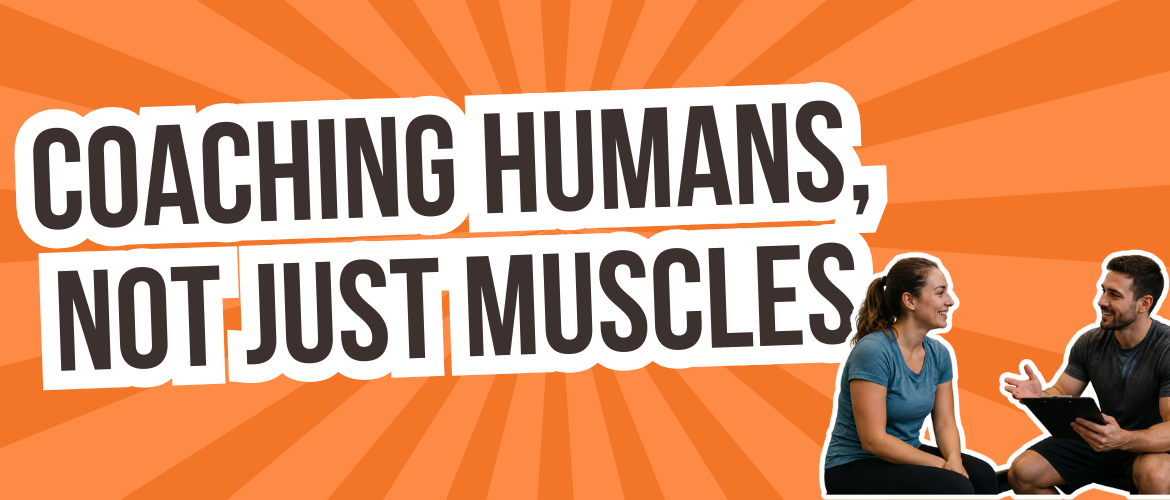
If you’ve spent any time working with clients in fitness, you’ll already know something important:
Personal training is rarely just about exercise.
Clients turn up stressed from work, struggling with confidence, battling emotional eating, dealing with relationship problems, grieving, anxious, overwhelmed, or simply exhausted from life. One minute you’re teaching a squat, the next you’re listening to someone explain why they haven’t slept properly for three weeks because their marriage is falling apart.
This leads many aspiring coaches to ask:
“Do Personal Trainers need counselling skills?”
The short answer is yes… but probably not in the way you think.
A great Personal Trainer does not need to become a therapist or counsellor. However, developing communication skills, empathy, listening skills, and behaviour change coaching abilities can massively improve your effectiveness as a coach.
In many ways, the best trainers become excellent people skills professionals who happen to use exercise as the tool.
Most people believe clients fail because they lack information.
In reality, most clients already know the basics:
The problem isn’t knowledge.
The problem is behaviour.
People struggle with motivation, stress, self-esteem, routines, emotional regulation, confidence, identity, and habits. This is why some clients can follow a programme perfectly for three weeks, then disappear after one stressful life event and eat an entire family-sized takeaway while watching Netflix in jogging bottoms.
As a coach, you are often working with human behaviour more than barbells.
That’s why communication matters so much.
This distinction is important.
Personal Trainers are not qualified mental health therapists unless they have separately trained in that area. It’s essential to stay within your scope of practice.
However, good coaching does involve skills commonly used within counselling environments, including:
You are not diagnosing mental health conditions.
You are helping people navigate behaviour change in a supportive and professional way.
Think of it this way:
A poor trainer only programmes exercises.
A good trainer coaches people.
A great trainer understands people deeply while still remaining within their professional boundaries.
Learning basic counselling and communication skills can improve nearly every area of coaching.
Clients stay with coaches they trust.
Many clients do not remember the exact sets and reps you gave them six months ago. They remember how you made them feel.
Did they feel judged?
Did they feel heard?
Did they feel capable?
Did they feel safe enough to fail without embarrassment?
The coaches who build long-term businesses are often the ones who create strong human connections.
One of the biggest challenges in fitness is adherence.
Getting somebody to train hard for one session is easy.
Helping them consistently exercise three times per week for two years is a completely different skillset.
Understanding behaviour change psychology helps you support clients more effectively when motivation drops, life gets stressful, or confidence disappears.
At some point as a trainer, clients will tell you deeply personal things.
You might hear about:
Without good communication skills, many trainers panic or become awkward during these moments.
Learning listening skills and professional boundaries helps you respond calmly and appropriately without feeling responsible for “fixing” the client.
Sometimes clients simply want to feel heard by somebody they trust.
This is where things become interesting.
Many trainers assume they need an actual counselling qualification. In reality, there are often more directly useful options for fitness professionals.
Your foundation qualification should always come first.
A good Level 3 Personal Training course should already teach elements of:
This forms the backbone of your coaching career.
Without strong fundamentals, advanced psychology courses become less useful.
Motivational Interviewing is one of the most valuable skills a coach can learn.
It is a communication approach designed to help people explore ambivalence and strengthen motivation for change.
Instead of telling clients what to do, you learn how to guide conversations that help clients discover their own reasons for change.
This is incredibly powerful in fitness coaching.
Rather than saying:
“You need to stop drinking every weekend.”
You learn to ask:
“How do you think alcohol is affecting your recovery and energy levels?”
That subtle difference changes everything.
Mental Health First Aid qualifications can be extremely valuable for Personal Trainers.
These courses help you:
Importantly, they teach you what NOT to do as much as what to do.
That matters.
Courses in behaviour change psychology are often more useful than pure counselling qualifications for fitness professionals.
Topics worth studying include:
Understanding why humans behave the way they do can transform your coaching results.
A surprising amount of client emotion appears around food.
Emotional eating, guilt, restriction, bingeing, and shame are common themes in fitness coaching.
Nutrition coaching qualifications that include behavioural nutrition approaches can help trainers navigate these conversations more effectively and compassionately.
For some trainers, yes.
Particularly if you want to specialise in:
However, most Personal Trainers do not need full counselling qualifications to become excellent coaches.
In fact, sometimes trainers overcomplicate things.
Clients often need consistency, encouragement, accountability, structure, and empathy more than deep psychotherapy.
The key is understanding your role.
You are there to support healthy lifestyle change through coaching and exercise, not become somebody’s therapist.
The fitness industry sometimes swings too far in either direction.
Some coaches focus only on science and programming while forgetting clients are emotional human beings.
Others become overly “mindset focused” while neglecting actual training knowledge.
The best coaches combine both.
They understand anatomy, physiology, programming, nutrition, and biomechanics while also understanding empathy, communication, motivation, and behaviour change.
That combination is incredibly powerful.
Because ultimately, clients rarely need somebody to scream motivational quotes at them while waving battle ropes around.
They need someone who understands people, communicates clearly, and helps them believe lasting change is possible.
There’s another important side to this conversation.
Coaching can become emotionally draining if you absorb everybody else’s problems without boundaries.
Many trainers spend all day supporting others while neglecting their own recovery, stress management, sleep, exercise, and mental wellbeing.
The best coaches lead by example.
That means:
You cannot pour from an empty shaker bottle.
So, do Personal Trainers need counselling skills?
Yes, to a degree.
Not because they should become therapists, but because fitness is deeply connected to human behaviour, emotion, confidence, identity, and lifestyle.
The ability to listen well, communicate effectively, build trust, and support behaviour change can dramatically improve your coaching and client results.
If you are considering becoming a Personal Trainer, developing both your technical coaching skills and your people skills will give you a huge advantage in the industry.
The trainers who thrive long term are rarely just exercise experts.
They are coaches who genuinely understand people.
If you’re thinking about becoming a Personal Trainer, or you want to improve your coaching and communication skills, explore our courses and qualifications.
You can also subscribe to the podcast and blog for more evidence-based coaching advice, fitness business guidance, and practical strategies for becoming a more effective coach.
"*" indicates required fields